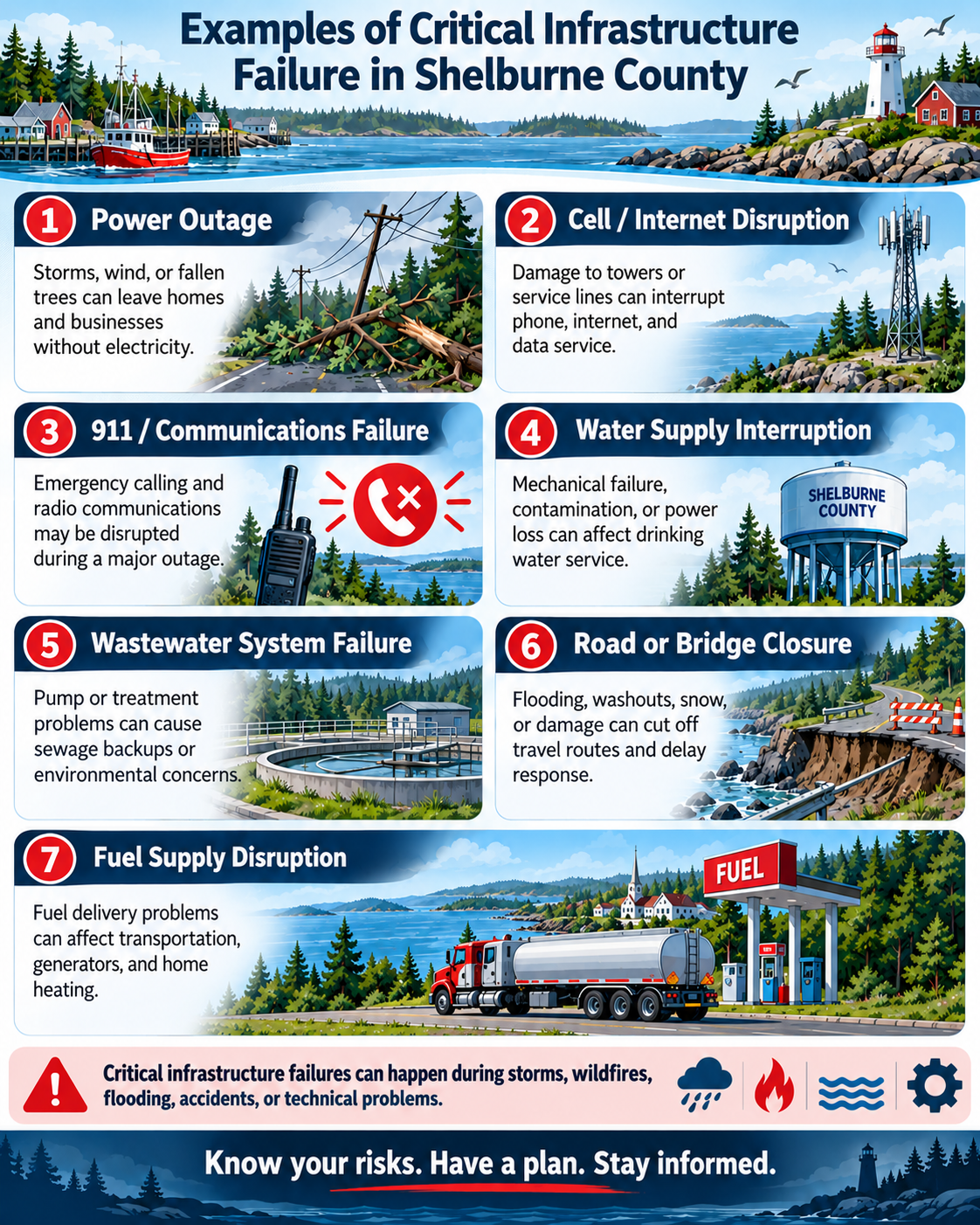
Critical Infrastructure Failure: Know Your Risks, Be Prepared
Critical infrastructure includes essential services such as electricity, drinking water, telecommunications, transportation and fuel supplies. When these systems fail, communities may experience power outages, communication disruptions, water shortages or limited access to essential services. Knowing how to respond to these disruptions can help keep you and your family safe.
1. MITIGATION – Reduce Your Risk
Take steps to reduce the impact of essential service disruptions.
Maintain your home's electrical, plumbing and heating systems.
Consider backup options for essential household services, where practical.
Protect electronic equipment with appropriate surge protection.
Know where your home's main water shutoff valve and electrical panel are located.
Identify which essential services your household depends on most.
2. PREPAREDNESS – Have a Plan
Planning ahead can help your household manage unexpected service interruptions.
Discuss how your family will manage without electricity, water or communications.
Identify alternative ways to stay warm, communicate and access drinking water.
Prepared a kit of essential items for everyone in your household to last 72hrs.
Know where to go if your home becomes unsafe or uninhabitable.
Make arrangements for family members who rely on electrically powered medical equipment.
Know how to receive official emergency information if internet or cellular services fail.
3. RESPONSE – Stay Safe
When essential services fail, protecting yourself and your family comes first.
Follow instructions from emergency officials and utility providers.
Avoid downed power lines, damaged equipment and unsafe infrastructure.
Never operate generators, barbecues or fuel-burning equipment indoors.
Follow drinking water advisories and avoid water suspected of contamination.
Avoid unnecessary travel when traffic signals, roads or fuel supplies are affected.
Check on neighbours who may require assistance.
4. RECOVERY – Restore Services Safely
Even after essential services are restored, some hazards may remain.
Follow utility providers' instructions before restarting affected equipment.
Check electrical appliances, plumbing and heating systems for damage.
Confirm drinking water is safe before using it following a water advisory.
Discard refrigerated or frozen food that has become unsafe.
Document damage and contact your insurance provider if necessary.
Review your household emergency plan and identify possible improvements.
Community Resilience Starts With You!
Mitigate • Prepare • Respond • Recover
For emergency information and public safety updates, visit Emergency Info Nova Scotia. Follow official notices from your municipality and utility service providers.
In an emergency, call 911.